




Description

Before we tax the rich, ask a more dangerous question: who paid for their fortunes?
A worker’s wages are garnished, public money props up the balance sheet, and the profits are celebrated as genius. Then a politician arrives promising “justice”: the billionaire will finally pay a higher tax rate. You might welcome the revenue — but you’d still be owed something more basic. What about giving back what was taken?
Don’t Just Tax the Rich, Pay Workers What They’re Owed is Venezuelan author Juan Rodulfo’s forensic takedown of America’s most comfortable myth: that today’s mega-fortunes are simply the prize of hard work, and that taxation alone can make them fair. Drawing on wage-theft research, NLRB filings, SEC records, GAO reports, and Economic Policy Institute data, Rodulfo follows the money through seventeen of America’s largest employers — Walmart, Amazon, Starbucks, Tesla, McDonald’s, Dollar General, Boeing, Apple, and more.
Inside, you’ll discover:
- The Hidden Payroll — how taxpayers quietly underwrite the payrolls of America’s largest employers through SNAP, Medicaid, and public-assistance navigation built into corporate onboarding
- Union Avoidance at Scale — the billion-dollar anti-union consulting industry, who buys it, and whether busting unions actually raises profits
- The Contractor Shield — how subcontractors and gig apps are engineered so that someone else bears the blame, the risk, and the losses
- The Corporate Subsidy Files — CHIPS Act megadeals, tax abatements, and the architecture of American influence that converts public money into private equity
- The Universal Restitution Formula — a provocative framework for calculating, and returning, what workers were never paid
This is not a book about envy. It is a book about accounting. Rodulfo separates lawful advantage from unlawful conduct, then asks the question the tax debate keeps dodging: if a fortune depends on unpaid obligations, is a tax payment an adequate substitute for paying those workers?
Perfect for readers of Nickel and Dimed, Dirt Cheap, and Evicted; for organizers, HR professionals, economists, and every worker who has ever watched profits soar while their paycheck stayed flat.
The rich may owe taxes. But someone else — someone with no yacht and no foundation — may be owed something bigger: restitution. Start with the ledger. Then demand the refund.
Review Quotes
- “Rodulfo turns a slogan into a ledger — and the ledger indicts.” — Editorial Review
- “The rare economics book that reads like an investigator’s file: seventeen companies, one clear pattern, no place to hide.” — Global Policy Insights
- “Refuses both easy answers — instead of taxing fortunes after the fact, it asks how they were assembled in the first place.” — Labor Notes Reader
- “Restitution is not a metaphor here. Rodulfo actually prices what workers are owed, company by company.” — Social Change Review
- “A marriage of EPI-style rigor and prosecutorial pacing. HR leaders will wince; organizers will quote it.” — Workplace Culture Quarterly
- “Read it and you will never hear the phrase ‘tax the rich’ the same way again.” — Advance reader, first edition
Table of Contents
- Introduction: Before We Tax the Fortune, Ask Who Paid for It — The question the tax debate keeps dodging
- Corporate Onboarding & Public Benefits Navigation in the U.S. — How new hires are walked to the welfare office
- The Architecture of American Influence — Who actually controls the mega-portfolios and the families behind them
- The Corporate Subsidy Files — America’s biggest subsidy recipients and the CHIPS Act sweepstakes
- The Hidden Payroll — How taxpayers and workers underwrite America’s largest employers (safety-net subsidy, company dossiers, union suppression, travel costs, health coverage gaps, the double subsidy)
- Union Avoidance at Scale — The avoidance industry, seventeen companies, and whether busting unions raises profits
- The Contractor Shield — Uber, Lyft, FedEx Ground, Amazon Flex, and the mechanics of “subsidy by proxy”
- The Human Capital & Infrastructure Value Equation (HCI-V2) — Formulas for valuing workers as infrastructure, not cost
- Restitution — The tricks of exponential capital accumulation and the Universal Restitution Formula
- The Author
BISAC Categories
- BUS038000 BUSINESS & ECONOMICS / Labor ← ★ BEST PRIMARY — highest monthly search demand and exact audience match (labor rights readers); Amazon maps it to “Labor & Employment,” the shelf where this book’s buyers browse.
- BUS036000 BUSINESS & ECONOMICS / Corporate & Business History
- POL032000 POLITICAL SCIENCE / Labor & Industrial Relations
Additional:
- SOC031000 SOCIAL SCIENCE / Social Classes & Economic Disparity
- BUS090000 BUSINESS & ECONOMICS / Government & Business
- LAW025000 LAW / Labor & Employment
- BUS035000 BUSINESS & ECONOMICS / Human Resources & Personnel Management
- SOC058000 SOCIAL SCIENCE / Social Policy
Regional Subject
- United States of America (North America) — the book’s case studies, subsidies, safety-net programs (SNAP/Medicaid) and labor law (NLRB) are entirely U.S.-based. Standard regional subject: United States of America (Thema place qualifier 1KBB-US; BISAC regional equivalent: HIS036110 History & Art History/United States general for regional shelving, subject-coded as U.S. economic policy).
Thema Subject
- Primary: KCF Labour economics, employment and unemployment
- Secondary: KCP Political economy · JBF Social & ethical issues
Qualifiers
- 1KBB-US — Place: United States of America, USA
- 2AB — Language: English
- 3MR — Time period: 2020 to 2029
- JBCT1? Not applicable (no educational-purpose or interest-age qualifier needed)
Discover more from Juan Rodulfo
Subscribe to get the latest posts sent to your email.
Additional information
| Format | Paperback, Hardcover, pdf, EPUB, Audiobook |
|---|
Related products
-
Sale!

TikTok Heroes in my Algorithm
Price range: $19.99 through $29.99 Select options This product has multiple variants. The options may be chosen on the product page -
Sale!
Fortune Cookie Coaching Vol I
Price range: $1.99 through $23.99 Select options This product has multiple variants. The options may be chosen on the product page -
Guaripete Premium Sleek Emotional Intelligence Over Everything iPhone Case
$17.99 Buy on Amazon -
Sale!
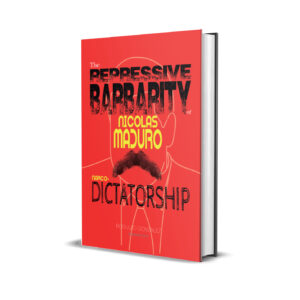
The Repressive Barbarity of Nicolas Maduro Narcodictatorship
Price range: $37.99 through $47.99 Select options This product has multiple variants. The options may be chosen on the product page